Designers often struggle to make dark, moody text legible without losing its edge. Using shadow font styles for gothic aesthetic solves this problem by adding depth and harsh contrast to heavy letterforms. This technique prevents black text from blending into dark backgrounds, creating a striking visual presence for album covers, posters, and alternative branding.
What Makes Gothic Shadow Typography Work?
The core of this style relies on pairing sharp, aggressive typefaces with distinct shadow layers. You usually see traditional blackletter shapes, heavy serifs, or jagged display fonts combined with solid drop shadows or elongated cast shadows. You need this approach when designing for metal bands, horror events, or streetwear labels. The shadow provides a harsh 3D illusion that lifts the heavy typography off a pitch-black canvas.
How Do You Adapt This to Your Specific Project?
Every design has unique constraints. First, consider your background texture. If you place text over a grunge or distressed image, use a solid, hard-edge shadow in a bright accent color to separate the letters from the visual noise.
Next, look at your layout dimensions. Wide, cinematic posters handle long, dramatic shadow effects well. Square social media posts or mobile screens require tighter, bolder lettering with shorter shadow drops to prevent the text from bleeding off the edges.
Finally, evaluate the context and readability maintenance. A highly detailed gothic font with a deep, multi-layered shadow works perfectly for a printed concert flyer. However, it might overwhelm a minimalist apparel website. For digital interfaces, stick to simpler gothic shapes with a single, crisp offset shadow to keep loading times fast and text sharp.
What Are Common Mistakes and How Do You Fix Them?
A frequent error is using a soft, blurry drop shadow on a sharp gothic font. This completely ruins the harsh, moody vibe of the aesthetic. Instead of relying on default layer styles in design software, manually duplicate your text layer. Move the bottom layer slightly down and to the right, then fill it with a contrasting tone like blood red, ash gray, or neon green.
Choosing the right shadow color is just as critical as the shape. Pure black shadows on dark backgrounds disappear, so use deep burgundy or stark white to create that signature separation. Always outline your text before applying complex manual shadows to prevent the shape from distorting if you change the font later.
If your text still gets lost in the background, try exploring methods for applying dark text fonts with dramatic shadow impact to restore the necessary contrast. You can also browse specialized libraries featuring shadow font styles for gothic aesthetic to find pre-configured vector assets that save time.
When building a permanent brand identity rather than a one-off poster, legibility is your main priority. Pairing these moody effects with bold shadow fonts for dark-themed logos ensures your final mark stays recognizable even when printed small on merchandise tags.
Final Typography Checklist
Before you export your final gothic design, run through these technical checks:
- Confirm the shadow angle aligns with the primary light source in your background photography.
- Increase the tracking (letter spacing) if the shadows overlap and create unreadable blobs of dark ink.
- Test the artwork in grayscale to ensure the gothic letterforms stand out based on value, not just color contrast.
- Flatten the shadow layer only after you lock in the exact offset distance and opacity.
 Dark Typography Trends with Shadow Effects
 Dramatic Dark Text with Shadow Impact
 Bold Shadow Fonts for Dark Themed Logos
 Best Shadow Fonts for Gothic Text
 Dark Atmosphere Fonts for Mysterious Projects
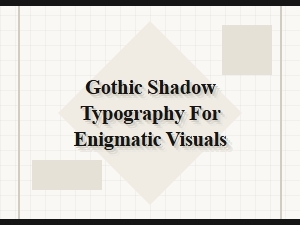 Gothic Shadow Typography for Enigmatic Visuals